kesht
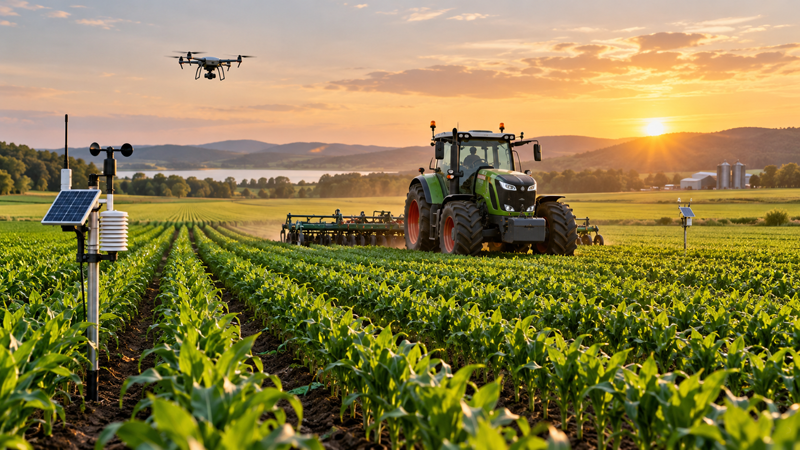
Precision agriculture is changing the way farmers manage their fields. Instead of treating an entire farm in the same way, farmers can use data to manage different areas according to their specific needs.
This approach can improve productivity while reducing waste.
What Is Precision Agriculture?
Precision agriculture uses technologies such as GPS, sensors, drones, satellite imagery, and farm management software to collect and analyze agricultural data.
Farmers can then make more accurate decisions about planting, irrigation, fertilization, and crop protection.
Main Precision Farming Technologies
- GPS guidance systems
- Soil moisture sensors
- Agricultural drones
- Satellite crop monitoring
- Variable-rate application equipment
- Digital farm management platforms
Traditional vs. Precision Farming
| Feature | Traditional Farming | Precision Agriculture |
|---|---|---|
| Field Management | Whole-field approach | Zone-specific management |
| Irrigation | Fixed schedule | Data-based irrigation |
| Fertilization | Uniform application | Variable-rate application |
| Monitoring | Manual inspection | Sensors and digital tools |
| Decision-Making | Experience-based | Experience + real-time data |
Benefits of Precision Agriculture
- Reduce water consumption
- Optimize fertilizer use
- Improve crop yields
- Detect problems earlier
- Reduce unnecessary field operations
- Improve overall farm profitability
Better agricultural data leads to better farming decisions.
The Future of Precision Farming
As sensors, artificial intelligence, and automation become more accessible, precision agriculture will become increasingly important. Connected machines and real-time field data will allow farmers to manage crops with even greater accuracy.
Conclusion
Precision agriculture combines farming experience with modern technology. By using accurate data to guide everyday decisions, farmers can improve efficiency, reduce waste, and build more productive and sustainable farming operations.