kesht
The future of agriculture depends on producing enough food while protecting the environment. Sustainable farming provides a practical path toward achieving both goals.
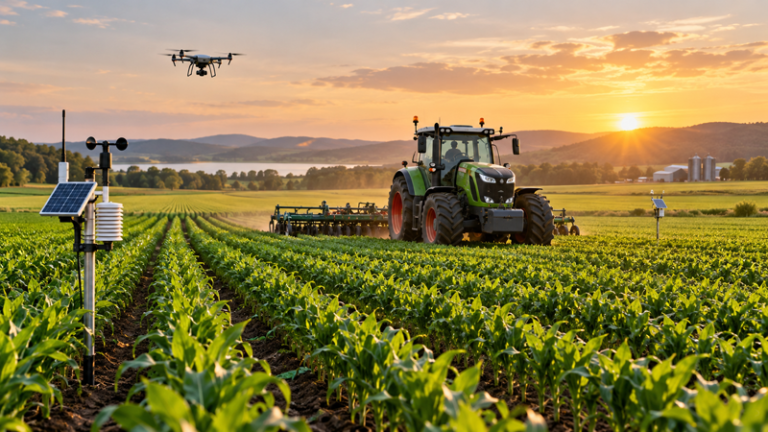
Modern farms are increasingly combining traditional agricultural knowledge with advanced technology.
What Is Sustainable Farming?
Sustainable farming focuses on producing food while protecting soil, water, biodiversity, and other natural resources for future generations.
- Reducing unnecessary water consumption
- Improving soil health
- Minimizing chemical waste
- Lowering energy consumption
- Protecting biodiversity
- Maintaining long-term farm profitability
Technologies Supporting Sustainable Agriculture
| Technology | Sustainability Benefit |
|---|---|
| Smart Irrigation | Saves water |
| Precision Fertilization | Reduces fertilizer waste |
| Solar Energy | Reduces fossil fuel use |
| Soil Sensors | Improves resource management |
| Agricultural Drones | Enables targeted treatments |
Precision Farming
Precision agriculture allows farmers to apply water, fertilizer, and crop protection products only where they are needed. This reduces unnecessary resource consumption while maintaining or even increasing crop yields.
Sustainable agriculture means producing better today without reducing the opportunities of tomorrow.
Renewable Energy on Farms
Solar panels, energy-efficient pumps, and renewable-powered equipment are becoming more common in agriculture. These technologies can reduce operating costs while decreasing the environmental footprint of farming operations.
Conclusion
The future of sustainable farming will combine environmental responsibility with innovation. Smart irrigation, precision agriculture, renewable energy, and data-driven decision-making can help farmers produce more efficiently while protecting valuable natural resources.