kesht
Increasing crop productivity is one of the most important goals in agriculture. Farmers need to produce higher-quality crops while controlling costs and protecting natural resources.
Fortunately, modern farming techniques can significantly improve crop performance.
How Can Farmers Increase Crop Productivity?
Higher productivity does not always require more land. Better management of existing farmland can often produce excellent results.
- Improving soil fertility
- Using high-quality seeds
- Optimizing irrigation
- Monitoring plant health
- Controlling pests at the right time
- Using precision agriculture technologies
Soil Management
Healthy soil is the foundation of productive farming. Regular soil testing helps farmers understand nutrient levels and determine the correct type and amount of fertilizer.
- Better soil structure
- Improved water retention
- Higher nutrient availability
- Stronger root development
Smarter Irrigation
Efficient irrigation delivers the right amount of water when crops need it.
| Irrigation Method | Efficiency | Best Application |
|---|---|---|
| Flood Irrigation | Low to Medium | Traditional farms |
| Sprinkler | Medium to High | Large fields |
| Drip Irrigation | High | High-value crops |
| Smart Irrigation | Very High | Precision farming |
Higher productivity comes from using resources more intelligently, not simply using more resources.
Technology and Crop Monitoring
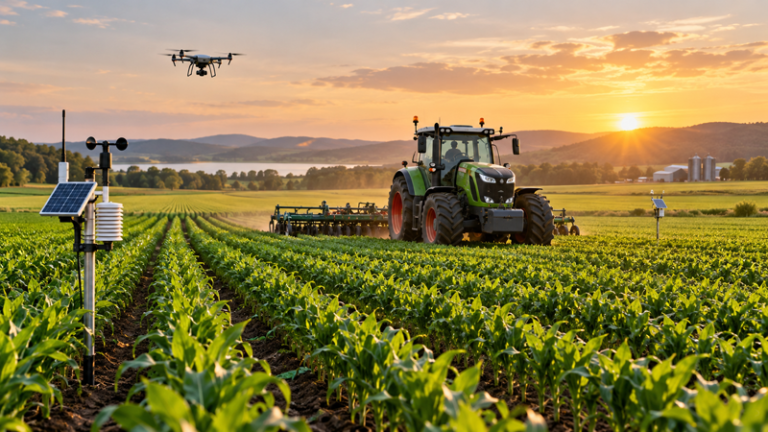
Sensors, satellite imagery, drones, and agricultural software help farmers monitor fields more accurately. Early detection of pests, diseases, or water stress allows farmers to react quickly and prevent significant crop losses.
Conclusion
Boosting crop productivity requires a combination of good soil management, efficient irrigation, quality inputs, and modern technology. By making informed decisions throughout the growing season, farmers can improve both crop yield and long-term farm profitability.